

Servo hydraulic presses represent a significant advancement in press technology, combining the power of hydraulic systems with the precision and efficiency of servo motor control. Unlike conventional hydraulic presses that run continuously, servo-driven hydraulic presses utilize servo motors that only consume power when actively moving or exerting force. This fundamental design difference enables energy savings of 40 to 70 percent, depending on the application.
The versatility of servo hydraulic presses spans an extraordinary range of industries — from manufacturing implantable medical devices requiring micron-level precision to forging massive components for heavy equipment. This guide explores how servo hydraulic press technology serves applications across the entire manufacturing spectrum, helping you understand which solution fits your production needs.
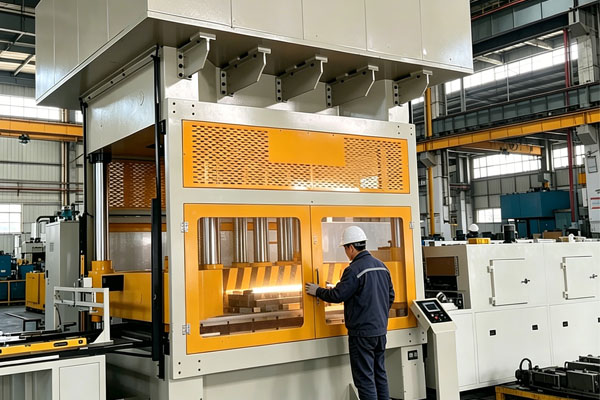
What Is a Servo Hydraulic Press?
Before diving into applications, let's clarify the basics: A servo hydraulic press is a advanced forming machine that combines the high force of hydraulic systems with the precision control of servo motors. It operates on Pascal’s law, using a servo motor to drive a hydraulic pump, creating a closed-loop control system that automatically adjusts to input changes for displacement, speed, or pressure. This design offers key advantages over traditional presses: energy savings of 30% to 70%, lower noise (often below 70dB during operation), less heat generation, and full closed-loop digital control for unmatched precision—down to ±0.01mm in pressure and displacement control. These features make it ideal for both delicate and heavy-duty manufacturing tasks.
Medical Device Manufacturing: Precision at the Micron Level
Medical device manufacturing demands some of the strictest quality standards across any industry. Orthopedic implants, surgical instruments, and other medical components require exceptional precision, consistency, and biocompatibility. Servo hydraulic presses are ideally suited for these demanding applications because they provide programmable force control, real-time monitoring, and repeatable accuracy measured in microns.
Key medical applications include:
● Orthopedic implant forming (hip stems, knee components, spinal implants)
● Surgical instrument stamping and forming
● Medical device housing production
● Compression testing for material property validation
The ability to maintain exact force profiles throughout the entire pressing cycle ensures that each component meets stringent regulatory standards without variation between batches. For contract manufacturers serving the medical industry, this repeatability translates directly to reduced scrap rates and lower production costs.
Aerospace Component Manufacturing: Where Reliability Is Non‑Negotiable
Aerospace manufacturing represents one of the most demanding applications for any forming equipment. Components used in aircraft engines and spacecraft structures must withstand extreme conditions while maintaining dimensional integrity. Servo forging presses can be used to manufacture high-performance aero engines and spacecraft components, producing consistent, high-quality shapes with minimal material waste.
Common aerospace applications:
● Turbine blade and vane forming
● Structural airframe components
● High-strength alloy forging
● Complex bracket and fitting stamping
The high precision of servo hydraulic presses meets the exacting tolerances required for safety-critical aerospace parts, while programmable motion profiles allow manufacturers to optimize forming sequences for difficult-to-work materials like titanium alloys and superalloys.
Automotive Stamping and Forging: Meeting Modern Production Demands
The automotive industry has been one of the earliest adopters of servo hydraulic press technology, and for good reason. Modern vehicles require an increasing number of high-strength steel components that are difficult to form using conventional presses. Servo hydraulic presses excel at applications including drawing, forming, blanking, punching, and cutting of automotive parts — particularly those involving lightweight, high-tensile-strength materials.
Automotive applications include:
● Body panel stamping and deep drawing
● Chassis component forming
● Gearbox and transmission parts
● Motor stator press-fitting for EVs
● High-strength steel component forming
Servo hydraulic presses also support the production of lighter automotive parts through optimized energy consumption and precise forming control. As electric vehicle production continues to expand, servo hydraulic presses are increasingly specified for battery casing forming and other EV-specific components.
Electronics and Precision Component Assembly
The electronics industry requires pressing solutions that can handle delicate components without causing damage while maintaining precise alignment and force control. Servo hydraulic presses deliver the fine control needed for applications ranging from connector assembly to sensor housing forming. Some servo press systems can also perform material property tests including compression, tension, and peeling — all with high control that unlocks accurate and repeatable testing.
Electronics applications include:
● Precision component press-fitting
● Sensor and connector assembly
● Small parts stamping and forming
● Electronic housing production
For electronics manufacturers, the programmable nature of servo hydraulic presses means that multiple part configurations can be produced on the same equipment simply by changing press parameters — reducing changeover time and increasing production flexibility.
Rubber, Composite, and Specialized Materials Processing
Servo hydraulic presses are also widely used in the processing of non-metallic materials. For rubber manufacturing, they are employed for the vulcanization molding of rubber products such as tires, seals, and rubber pads, where the precisely controlled pressure ensures full vulcanization within the mold to produce products with specific performance properties.
Material processing applications:
● Rubber vulcanization molding
● Composite material forming (including HP-RTM for fiber-reinforced composites)
● Liquid silicone rubber injection molding
● Powder compacting and sintering preparation
● Ceramic component forming
For composite material manufacturing, HP-RTM servo composite hydraulic presses are used to mix and inject resin into vacuum-sealed molds pre-laid with fiber-reinforced materials, followed by resin flow filling, impregnation, curing, and demolding processes.
Heavy Forging and Large-Scale Metal Forming
At the other end of the application spectrum, servo hydraulic presses handle some of the most demanding heavy forging operations in manufacturing. Closed-die forging presses are ideally suited to applications involving carbon steel, aluminum, copper, and various alloys. These systems deliver full tonnage throughout the stroke with energy-efficient performance and advanced die protection.
Heavy forging applications include:
● Closed-die forging for black metals and non-ferrous metals
● High-temperature alloy forging
● Hot die forming for magnesium-aluminum alloys
● Isothermal forging deformation
● Large-die workpiece pre-forging
● Multi-station ring forgings
● Agricultural and heavy equipment components
Servo forging presses can also perform heavy-duty, high-intensity operations, with some hydraulic press lines reaching up to 400 to 4000 tons of forming force. Forging presses are built for high-force metal forming, offering cold, warm, and hot forging solutions to handle the toughest manufacturing demands.
How to Choose the Right Servo Hydraulic Press for Your Application
Selecting the appropriate servo hydraulic press depends on several application-specific factors:
1. Required tonnage — Determine the maximum force needed for your forming operations. Light assembly work may require only 10-20 tons, while heavy forging demands hundreds or thousands of tons.
2. Precision requirements — Evaluate whether your application demands micron-level positioning accuracy or ±0.5% pressure repeatability, or if standard hydraulic control is sufficient.
3. Production volume — High-volume applications benefit most from the speed and programmability of servo control.
4. Material characteristics — Consider whether you are working with high-strength alloys, delicate electronics components, rubber compounds, or composite materials.
5. Available floor space — While servo hydraulic presses offer similar footprints to conventional presses, auxiliary equipment requirements may differ.
6. Energy costs — In regions with high electricity rates, the 40-70% energy savings of servo hydraulic presses provide faster payback periods.
Consulting with experienced servo hydraulic press manufacturers can help determine the optimal configuration for your specific forming requirements.
Conclusion: A Technology for Every Manufacturing Need
Servo hydraulic press technology has matured into a versatile solution suitable for applications ranging from micron-precision medical device forming to massive heavy forging operations. The combination of programmable force control, real-time monitoring, significant energy savings, and reduced maintenance requirements makes servo hydraulic presses increasingly the technology of choice across diverse industries — from automotive stamping and aerospace forging to electronics assembly and composite material processing.
Whether you are a medical device manufacturer seeking repeatable precision, an automotive supplier needing to form high-strength steel components, or a forging house producing large-scale parts, servo hydraulic press technology offers a compelling combination of performance, efficiency, and reliability.
 +86-13509801050
 E-mail
