

This article provides a comprehensive analysis of common hydraulic press problems from four key perspectives: purchaser, business owner, operator, and maintenance engineer, offering preventative measures and solutions.
Introduction: Why Hydraulic Press Problems Are Often Misunderstood
Hydraulic presses are widely regarded as robust, reliable, and long-lasting machines. From metal forming and cold forging to composite molding, battery assembly, and precision stamping, they are the backbone of modern manufacturing.
However, despite their reputation for durability, hydraulic presses are also one of the most frequently misunderstood pieces of industrial equipment.
Many failures are not caused by “bad machines,” but by:
- Poor purchasing decisions - Choosing the wrong specifications or supplier
- Inappropriate application matching - Machine and task mismatch
- Inadequate operator training - Lack of proper knowledge
- Neglected preventive maintenance - Lack of regular maintenance
- Unrealistic production expectations - Overly high expectations for machine capabilities
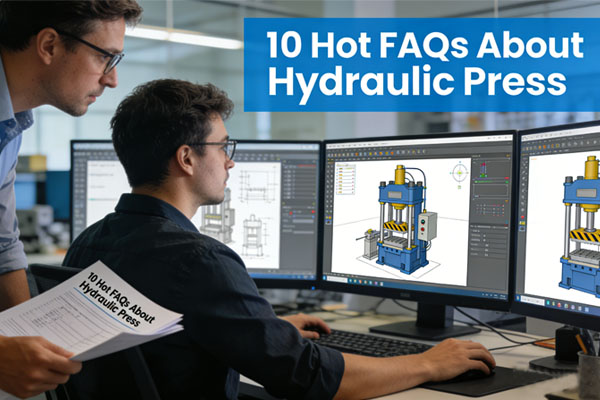
This article addresses top 10 FAQs about hydraulic press, not from a single technical angle, but from four critical perspectives:
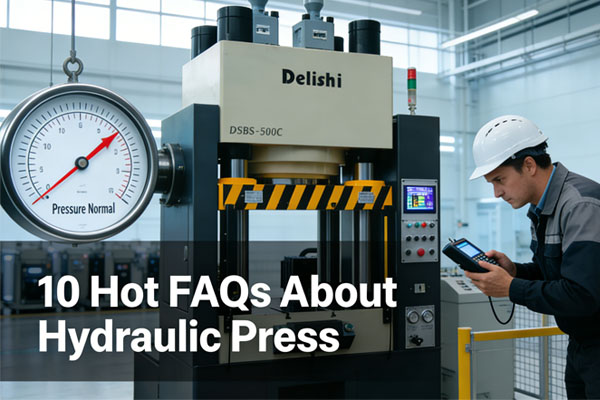
Why Does the Hydraulic Press Fail to Reach Rated Tonnage?
Buyer's Perspective
Many buyers assume that “100 tons” means the machine can deliver 100 tons continuously and under all conditions. In reality, tonnage depends on:
- System pressure
- Cylinder diameter
- Hydraulic oil condition
- Valve response speed
Common purchasing mistake: Selecting a press solely based on nominal tonnage without understanding the pressure curve and working stroke.
Business Owner's Perspective
Failure to reach rated tonnage leads to:
- Incomplete forming
- Increased scrap rates
- Rework and tool damage
- Production delays
This problem often surfaces after production ramps up, when downtime becomes expensive.
Operator's Perspective
Operators may notice:
- The press slows down under load
- The pressure gauge never reaches the set value
- Alarms triggered during heavy forming
Improper manual adjustments often worsen the issue.
Preventive Measures
- Verify actual forming force vs. nominal tonnage during procurement
- Use pressure sensors and tonnage monitors
- Schedule oil analysis and leakage inspections
Corrective Actions
- Recalibrate pressure relief valves
- Replace worn seals and pump components
- Bleed air from the hydraulic system
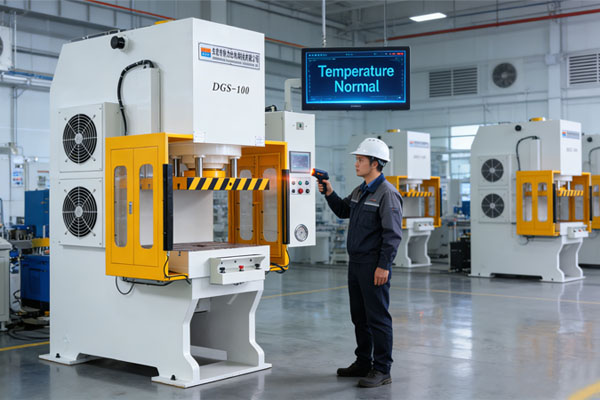
Why Does the Hydraulic Press Overheat During Continuous Operation?
Buyer's Perspective
Cooling systems are often overlooked during procurement. Many buyers focus on:
- Press frame
- Cylinder size
- Control system
…and ignore heat dissipation capacity.
Business Owner's Perspective
Overheating causes:
- Frequent production stoppages
- Reduced oil life
- Accelerated component wear
- Higher electricity consumption
Long-term overheating silently destroys ROI.
Operator's Perspective
Operators experience:
- Oil temperature alarms
- Sluggish machine response
- Increased noise from the pump
In extreme cases, the machine may automatically shut down.
Preventive Measures
- Select presses with proper cooling capacity for duty cycle
- Match oil viscosity to ambient temperature
- Monitor oil temperature in real time
Corrective Actions
- Upgrade oil coolers
- Increase tank volume
- Adjust cycle parameters to reduce constant high pressure
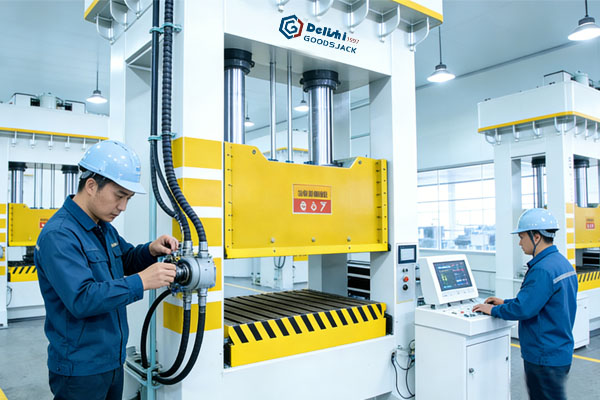
Why Does Hydraulic Oil Leak Frequently?
Buyer's Perspective
Low-cost presses often use:
- Inferior seals
- Poor hose fittings
- Low-grade machining tolerances
Short-term savings lead to long-term losses.
Business Owner's Perspective
Oil leaks result in:
- Unsafe working conditions
- Environmental compliance risks
- Increased maintenance costs
- Negative factory image during audits
Operator's Perspective
Operators may see:
- Oil stains on the floor
- Slippery working areas
- Frequent top-ups
This directly impacts safety.
Preventive Measures
- Choose presses using international-standard seals
- Implement routine inspection schedules
- Train operators to report minor leaks early
Corrective Actions
- Replace seals proactively
- Re-torque fittings
- Upgrade hoses with higher pressure ratings
Why Is the Press Stroke Inaccurate or Inconsistent?
Buyer's Perspective
Stroke accuracy depends heavily on:
- Control system quality
- Sensor resolution
- Mechanical rigidity
Choosing a press without closed-loop control is risky for precision work.
Business Owner's Perspective
Inconsistent stroke leads to:
- Dimensional inconsistency
- Product rejection
- Customer complaints
This is particularly critical in automotive and battery industries.
Operator's Perspective
Root causes include:
- Position sensor wear
- Electrical interference
- Mechanical deformation
Preventive Measures
- Use servo-controlled or proportional valve systems
- Periodically calibrate sensors
Corrective Actions
- Replace faulty encoders
- Reinforce structural components
Why Does the Hydraulic Press Make Abnormal Noise or Vibration?
Buyer's Perspective
Noise is not just a comfort issue—it signals:
- Poor hydraulic design
- Low-quality pumps
Business Owner's Perspective
Noise leads to:
- Operator fatigue
- Potential labor complaints
- Compliance issues
Operator's Perspective
Common complaints:
- Loud whining sounds
- Sudden vibration during pressing
Preventive Measures
- Proper suction line design
- Correct oil level maintenance
Corrective Actions
- Eliminate air leaks
- Replace damaged pumps
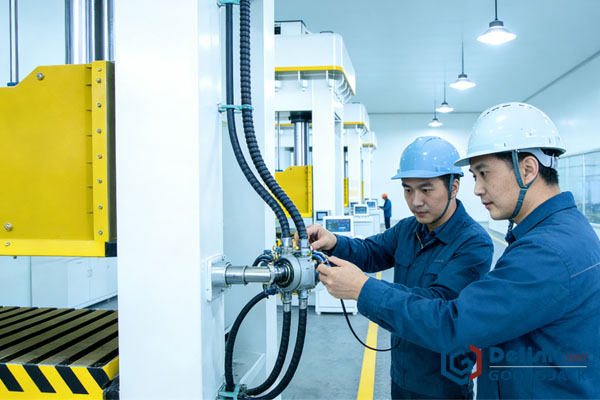
Why Does the Press Consume More Energy Than Expected?
Buyer's Perspective
Energy efficiency is often underestimated at purchase stage.
Business Owner's Perspective
High energy consumption erodes profit margins.
Operator's Perspective
Operators may leave machines idling at full pressure
Preventive Measures
- Adopt servo-hydraulic systems
- Optimize cycle logic
Corrective Actions
- Retrofit energy-saving drives
Why Does the Control System Fail or Freeze?
Buyer's Perspective
Low-cost PLCs and HMIs reduce initial cost but increase risk.
Business Owner's Perspective
Control failure equals total production halt.
Operator's Perspective
Symptoms:
- Screen freezes
- Program loss
Preventive Measures
- Industrial-grade controllers
- Stable power supply
Corrective Actions
- Replace damaged modules
Why Is Tooling or Mold Life Shorter Than Expected?
Buyer's Perspective
Machine rigidity directly affects tooling life.
Business Owner's Perspective
Frequent mold replacement is extremely costly.
Operator's Perspective
Operators see uneven forming results.
Preventive Measures
- Proper machine-tool matching
Corrective Actions
- Realign press structure
Why Are Safety Incidents Still Happening on Hydraulic Presses?
Buyer's Perspective
Safety systems are often downgraded to save cost.
Business Owner's Perspective
Accidents risk:
- Legal liability
- Production shutdowns
Operator's Perspective
Safety devices may be bypassed or damaged.
Preventive Measures
- Dual safety circuits
- Regular safety audits
Corrective Actions
- Reinstate safety interlocks
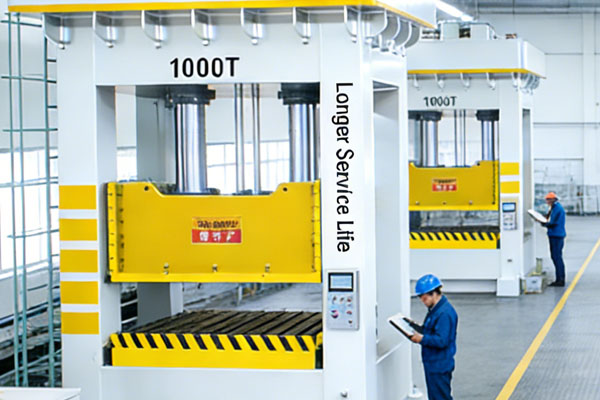
Why Does the Hydraulic Press Have a Shorter Service Life Than Expected?
Buyer's Perspective
Over-spec or under-spec selection shortens life.
Business Owner's Perspective
Early replacement destroys investment value.
Operator's Perspective
Lack of preventive maintenance is the core issue.
Preventive Measures
- Lifecycle-based maintenance planning
Corrective Actions
- Major overhaul and component upgrades
Conclusion: Prevention Is Always Cheaper Than Repair
Hydraulic press problems are rarely sudden or mysterious.
They are predictable, preventable, and manageable when viewed from all key roles within an organization.
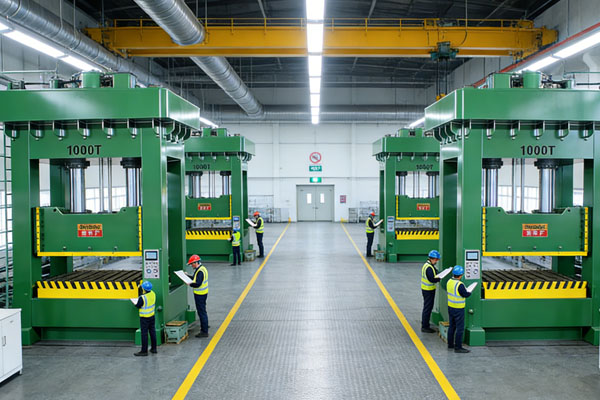
A successful hydraulic press strategy requires:
- Smart purchasing decisions
- Realistic production planning
- Proper operator training
- Disciplined maintenance systems
When buyers, owners, operators, and engineers speak the same technical and operational language, hydraulic presses become not a cost burden—but a long-term competitive advantage.
- Hydraulic Press FAQs
Tags :
 +86-13509801050
 E-mail
