

Decades of real‑world experience — helping you catch cylinder failure before it stops production.
From Delishi / Goodsjack Hydraulic Machinery | Since 1997
Delishi/Goodsjack Hydraulic Machinery — We’ve engineered, tested, and serviced thousands of hydraulic presses across automotive, aerospace, new energy, and general manufacturing. Over three decades, nothing taught us more than real‑world breakdowns. And the truth is: most catastrophic cylinder failures send clear warnings days or even weeks before they happen. Ignoring those warnings leads to unplanned downtime, expensive repairs, and safety risks.
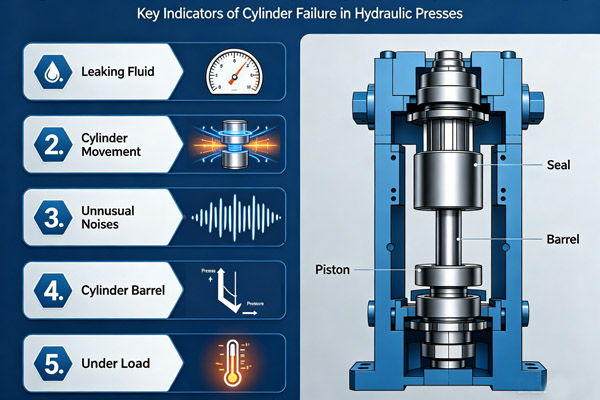
In this guide, we share five undeniable signs that your hydraulic cylinder is failing. Use these insights to troubleshoot early, plan maintenance, and keep your press running like the day it left our factory. Let’s get started.
Why Early Detection Saves Your Bottom Line
A small pinhole leak or a barely noticeable speed reduction might seem harmless. But hydraulic systems operate under extreme pressures — often 2,000–5,000 psi. A worn seal allows contamination to enter, scoring the cylinder bore and ruining the piston. A bent rod worsens side loading, eventually cracking the barrel. Detecting failure signs early can extend cylinder life by 2–3x and reduce repair costs by over 60%. That’s why our service engineers train every customer to watch for these five red flags.
Sign #1: Visible Hydraulic Fluid Leaks (External)
What to look for: Puddles under the press, an oily film coating the cylinder, or drips that appear around the rod gland. Even a “sweating” rod seal is a sign of imminent failure.
Why it happens: Rod seals are exposed to friction, heat, and pressure cycles. Over time, they harden, crack, or lose elasticity. Contaminated oil (with metal particles) accelerates seal wear dramatically.
Why act now: A small leak reduces system pressure, forcing your pump to work harder. Pressure loss directly affects the pressing force and cycle consistency. Worse, fluid leaking past the rod can drip into electrical cabinets or create slippery work environments.
What you can do: Inspect the rod for scratches or chrome damage. If the rod is smooth, replacing the rod seal restores performance. If the rod is damaged, re‑chroming or cylinder replacement is needed. Don’t just replace the seal — address the root cause.
Sign #2: Sluggish, Jerky, or Erratic Cylinder Movement
What to look for: The cylinder extends or retracts slower than usual. The motion feels uneven — it stutters, hesitates, or moves in tiny “jumps.” The press may also fail to complete the full stroke.
Why it happens: Two main culprits: ① Internal cross-port leakage (worn piston seals allow oil to bypass from one side to the other). ② Aeration or contaminated oil — air bubbles in the fluid make the system spongy. Low oil level or a loose suction line cause aeration.
Why act now: Jerky motion damages seals even more — the cylinder “chatters” under load, causing metal fatigue in mounting bolts and stressing the frame. Internal by-pass also generates extra heat, cooking the hydraulic fluid and damaging pumps.
What you can do: First, bleed air from the system. Check oil level and color (milky = water, burnt smell = overheating). If fluid is clean but symptoms persist, the piston seal is likely bypassing. Plan a cylinder teardown and seal kit replacement.
Sign #3: Unusual Noises – Knocking, Squealing, or Banging
What to look for: A high‑pitched whine from the pump area (aeration/cavitation). Deep knocking or banging that occurs when the cylinder changes direction or reaches the end of stroke.
Why it happens: Squealing often indicates air in the system or a clogged inlet filter. Knocking can be more severe: misaligned mounting, worn piston bearing, or the piston hitting the end cap because of failed cushions. A bent rod also knocks against the barrel interior.
Why act now: Internal knocking generates metal debris that spreads through the entire hydraulic circuit, damaging valves, pumps, and actuators. What starts as a slight knock can turn into a cracked barrel within days.
What you can do: Immediately stop the press and visually inspect alignment. Make sure mounting bolts are tight. Bleed the system and check oil quality. If knocking persists, do NOT run the press. Call a specialist — a full cylinder inspection is required to avoid catastrophic rupture.
Sign #4: Press Loses Pressure / Cylinder Drifts Under Load
What to look for: You set a specific pressing force, but the pressure gauge slowly drops. The cylinder “creeps” down or retracts unexpectedly when the valve is closed. No external leak is visible.
Why it happens: This is the hallmark of internal piston seal failure. High‑pressure oil slips across the piston, moving from the cap side to the rod side (or vice versa). The pump constantly tries to compensate, but the cylinder cannot hold position. A worn control valve or relief valve can also cause drifting.
Why act now: In manufacturing, drifting ruins part consistency and may damage expensive tooling. For safety‑critical applications (like brake pad forming or metal stamping), a drifting press is a hazard. It also increases energy consumption and overheats the oil.
What you can do: Test by isolating the cylinder: lock the cylinder valve; if pressure still drops, the cylinder is leaking internally. Piston seals need replacement. While you're at it, inspect the cylinder bore for scoring — if bore is damaged, cylinder replacement is the better long‑term solution.
Sign #5: Bulging, Swollen, or Blistered Cylinder Barrel
What to look for: Visible outward deformation of the steel barrel. Paint blistering or a noticeable “belly” in the middle of the cylinder. This is a critical, emergency warning.
Why it happens: Extreme internal pressure beyond design limits (e.g., relief valve set too high) OR severe mechanical side loading that distorts the barrel. Often the cylinder has been operating with a bent rod for a long time, causing uneven stress and eventual bulging.
Why act immediately — RIGHT NOW: A bulging cylinder is on the verge of explosive rupture. If it bursts, high‑pressure oil spray can cause severe injury or even amputations. DO NOT operate the press under any circumstances. Immediately lock out/tag out the machine.
What you can do: No field repair. The cylinder must be replaced entirely. The structural integrity is compromised. A new cylinder from a reputable manufacturer like Delishi/Goodsjack ensures safety and performance. Do not attempt to weld or patch a bulged barrel.
Repair or Replace? A Practical Guide From Our Engineering Team
Once you’ve identified a failing cylinder, you’ll face the decision: fix or replace? Based on thousands of repairs, here’s our rule of thumb:
- ✅ Repair (re-seal, re-chrome, replace wear rings) when: The cylinder barrel is round and undamaged, the rod has only light scoring (re‑chromable), and the piston is intact. Seal replacement is cost‑effective and brings the cylinder back to 95%+ of original performance.
- ❌ Replace when: The barrel is bulged, cracked, or deeply scored; the rod is bent beyond 0.1mm per meter; the cylinder has suffered massive internal overheating (bluing of metal); or the repair estimate exceeds 55% of a new cylinder. A new cylinder also gives you full warranty and peace of mind.
As a manufacturer, we always recommend: if you’re unsure, contact us with photos and specifications. Our support team will help you decide. Running a damaged cylinder will cost your production line far more than a professional rebuild or replacement.
Preventive Maintenance Checklist (30‑Year Proven)
Most cylinder failures are preventable with simple, regular checks. Here is our checklist that we give to every customer:
| Frequency | Inspection Point | What to Look For |
|---|---|---|
| Daily (operator) | Visual cylinder & hoses | Leaks, wet spots, unusual noises, bulges |
| Weekly | Rod surface condition | Scratches, pitting, chrome flaking |
| Weekly | Hydraulic oil level & color | Low level, milky (water), burnt smell |
| Monthly | Mounting bolts & alignment | Loose bolts, misalignment causing side load |
| Every 3 months | Cycle time & pressure stability | Slower cycles, pressure drop, drifting |
| Annually / 2000 hrs | Full cylinder seal inspection | Replace seals proactively for heavy duty presses |
Pro tip: Keep a logbook. Trend analysis of pressure loss or cycle time helps predict failures before they become emergencies.
Why Trust Delishi / Goodsjack Hydraulic Machinery?
For nearly three decades (since 1997), Delishi / Goodsjack have been at the forefront of hydraulic engineering. Our ISO 9001:2015 and CE‑certified presses range from 5 tons to 8,000 tons — covering C‑frame, four‑column, cold forging, deep drawing, and servo‑hydraulic models. Our products run in Foxconn, Apple’s supply chain, FAW, SAIC, GAC, and many global leaders.
We don’t just manufacture hydraulic presses; we support them with factory‑trained service engineers and a comprehensive spares inventory. Our guides, like the one you just read, reflect real field data from thousands of troubleshooting cases. When you choose Delishi/Goodsjack, you choose uptime, durability, and a partner that answers the call.
- Custom Hydraulic Press
Tags :
 +86-13509801050
 E-mail
